Tendências de IA e tecnologia
Aprendizado de máquina para leigos: por que agora é essencial para a carreira
Dê um impulso à sua carreira com uma compreensão básica de aprendizado de máquina. Descubra etapas concretas, exemplos reais e por que o aprendizado de máquina para profissionais impulsiona a inovação e decisões mais inteligentes em todos os setores.
Anúncios
Como um conhecimento básico de aprendizado de máquina pode dobrar seu valor profissional
É bem provável que você já tenha interagido com aprendizado de máquina esta semana — talvez até hoje. Recomendações em plataformas de streaming e alertas de fraude em tempo real dependem de aprendizado de máquina para que os profissionais atuem de forma mais inteligente.
Ter uma compreensão básica de aprendizado de máquina não é privilégio apenas de cientistas ou especialistas em tecnologia. Os ambientes de trabalho modernos dependem de insights baseados em dados, e saber como o aprendizado de máquina pode ser determinante para o sucesso ou fracasso de um projeto oferece uma clara vantagem competitiva.
Seja qual for a sua área de atuação — finanças, marketing, saúde ou manufatura —, aprender o básico de aprendizado de máquina para profissionais pode ajudá-lo a colaborar melhor, identificar novas oportunidades e preparar sua carreira para o futuro.
Você será redirecionado a outro site
Conectando o impacto no local de trabalho com aprendizado de máquina: aplicações práticas que você já pode identificar.

Quando você começar a reconhecer o aprendizado de máquina (ML) para profissionais incorporado em ferramentas do dia a dia, perceberá o quão comuns esses sistemas se tornaram. A adoção está se acelerando — e a habilidade de identificar padrões úteis é cada vez mais esperada.
Conhecimentos básicos de aprendizado de máquina permitem entender por que certas ferramentas de negócios sugerem próximos passos, sinalizam comportamentos incomuns ou preveem a demanda. Isso desmistifica o que antes parecia mágica tecnológica e torna a conversa com as equipes de dados mais produtiva.
Aumentando a confiança com experiências reais de aprendizado de máquina.
Imagine uma reunião com um cliente onde você está analisando painéis de dados analíticos. Com a experiência de aprendizado de máquina para profissionais, você entende imediatamente por que um modelo de "previsão de churn" sinalizou um segmento de clientes. Agora, você pode explicar o padrão claramente aos seus colegas.
Essa habilidade gera credibilidade. A capacidade de traduzir o jargão de aprendizado de máquina em benefícios claros não é exclusividade de cientistas. É para gerentes, analistas, profissionais de marketing e todos que colaboram em projetos digitais.
Na próxima vez que um colega perguntar: "Por que nossa ferramenta de orçamento previu gastos excessivos para o próximo trimestre?", você entenderá a lógica de aprendizado de máquina e ajudará a colocar estratégias inteligentes em prática.
Por que equipes interdisciplinares usam aprendizado de máquina toda semana
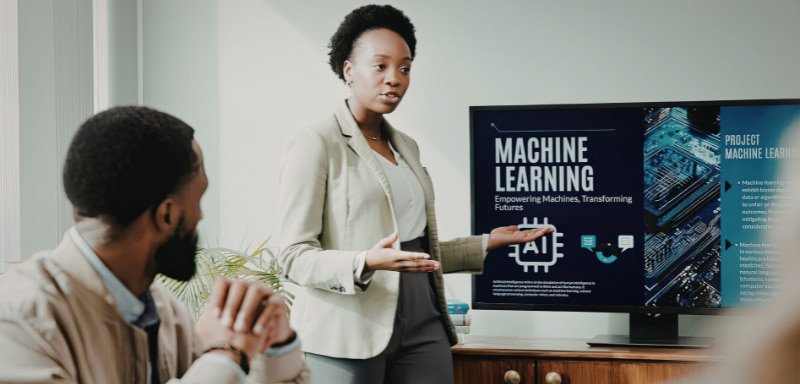
As equipes modernas de varejistas, bancos e empresas de logística interagem regularmente com sugestões baseadas em aprendizado de máquina, agendamento automatizado e avaliações de risco. Mesmo ao se comunicar com equipes de tecnologia, entender o aprendizado de máquina para profissionais ajuda a manter o projeto no caminho certo.
Aprender o básico também ajuda você a fazer perguntas de acompanhamento mais relevantes. Em vez de apenas concordar com a cabeça, você pode perguntar: "Quais recursos influenciaram o resultado desta vez?" e obter insights mais práticos das discussões da sua equipe.
Esse hábito leva a produtos digitais mais eficazes, porque os profissionais com formação em aprendizado de máquina trazem nuances e contexto — e não apenas respostas superficiais — para cada reunião de projeto.
| Indústria | Caso de uso comum de aprendizado de máquina | Habilidade adquirida | Próximo passo |
|---|---|---|---|
| Varejo | Mecanismos de recomendação | Entendendo a personalização | Identifique tendências nos dados de vendas e ajuste as ofertas. |
| Assistência médica | Ferramentas de diagnóstico | Reconhecer avaliações orientadas por aprendizado de máquina | Discuta as conclusões com as equipes técnicas e clínicas. |
| Financiar | Detecção de fraudes | Interpretar alertas e pontuações | Colaborar com a equipe de risco e conformidade |
| Marketing | Modelos de segmentação | Identificar o público-alvo | Ajuste as campanhas para obter um melhor engajamento. |
| Fabricação | Manutenção preditiva | Monitorar o estado do equipamento | Planeje os reparos antes que as falhas aconteçam. |
Tomar decisões mais inteligentes compreendendo os fundamentos do aprendizado de máquina.
Com o aprendizado de máquina para profissionais, você não aceita decisões automatizadas sem questionar. Você aprende a questionar, confirmar e usar os resultados para embasar suas próximas ações com confiança.
O conhecimento básico permite que os profissionais trabalhem em parceria com equipes de TI ou de dados em projetos, garantindo que as decisões automatizadas estejam alinhadas com os objetivos de negócios, e não apenas com o que o algoritmo decide.
Hábitos de coleta de dados que os profissionais devem adotar.
Comece a etiquetar os dados logo no início do projeto — não conte com a limpeza de tudo no final. O aprendizado de máquina para profissionais funciona melhor com entradas estruturadas e anotadas. Sugira rótulos de dados claros e consistentes desde o início para evitar dores de cabeça.
- Monitore como os dados de vendas são inseridos; pequenas alterações melhoram as análises de IA.
- Incentive os colegas a registrar os motivos para padrões incomuns, o que ajuda a aprimorar modelos futuros.
- Peça aos membros da equipe que validem os dados discrepantes, fornecendo feedback real antes que sejam usados como entrada para o treinamento de aprendizado de máquina.
- Verifique novamente como os dados ausentes são tratados — valores em branco incorretos distorcem os resultados e podem acionar alertas desnecessários.
- Assuma a responsabilidade pelo processo de reporte de erros. Uma descrição detalhada do que não funcionou aprimora as sugestões futuras de aprendizado de máquina para todos.
Tornar esses hábitos de dados rotineiros aumenta a precisão e oferece uma maneira prática de aprimorar o que o aprendizado de máquina para profissionais proporciona diariamente.
Cultivar conversas construtivas com os criadores de algoritmos.
Peça aos cientistas de dados que expliquem a escolha das variáveis. Demonstre curiosidade sobre por que o aprendizado de máquina para profissionais prioriza certos campos, como o histórico de pedidos em vez da localização, na previsão da rotatividade de clientes.
- Inicie as ligações com exemplos específicos. Diga algo como: "Os picos da semana passada pareceram estranhos — o modelo levou em conta o feriado?"
- Estruture o feedback em torno dos resultados de negócios. Destaque impactos como a redução de falsos positivos ou a melhoria da segmentação.
- Explique o contexto das variáveis de entrada. O conhecimento das peculiaridades do setor permite que as equipes refinem a precisão do modelo onde ela é mais importante.
- Apoie solicitações por mais dados quando o aprendizado de máquina parecer frágil. Por exemplo, pergunte se a inclusão de tendências demográficas poderia esclarecer as previsões.
- Exija transparência nos processos de tomada de decisão. Saber como os resultados são gerados ajuda os colegas não técnicos a confiarem e a agirem de acordo com as recomendações de aprendizado de máquina.
Abordar o aprendizado de máquina com curiosidade e clareza proporciona às equipes melhores resultados, previsões mais precisas e maior adesão a projetos futuros.
Ampliando as opções de carreira com habilidades essenciais em aprendizado de máquina.
O conhecimento prático de aprendizado de máquina (ML) para profissionais de qualquer setor os torna candidatos mais qualificados para funções estratégicas e equipes de ritmo acelerado. A linguagem da transformação digital está enraizada nessas habilidades.
Em vez de ser deixado de lado por jargões, você participa ativamente de conversas sobre lançamentos de funcionalidades ou automação de processos. Isso abre portas para movimentações laterais, cargos de liderança e projetos especiais.
Reduzindo a lacuna entre a área de tecnologia e os demais departamentos.
Profissionais com experiência em aprendizado de máquina (ML) transitam entre as áreas de TI, marketing, operações ou vendas. Em uma reunião de equipe, você pode explicar o que significa uma "variável ponderada" e por que ela impacta os resultados da campanha.
Isso reduz a falta de comunicação e alinha todos sobre o que uma estratégia baseada em dados pode, de fato, alcançar.
Profissionais que sabem perguntar: "Quais fatores estão influenciando essa pontuação?" fornecem aos líderes empresariais evidências concretas para ação, e não apenas palavras da moda.
Estudo de caso: Especialista em marketing se torna líder de projeto de aprendizado de máquina
Zara, especialista em marketing, fez um curso introdutório de aprendizado de máquina. Quando sua equipe começou a usar uma ferramenta de segmentação baseada em aprendizado de máquina, ela conectou as tendências do público às peculiaridades das mensagens, aumentando o engajamento em 20% em um trimestre.
Os colegas notaram sua habilidade. Como resultado, Zara foi escolhida para coordenar dados, estrutura de campanhas e testes A/B em toda a equipe digital, utilizando aprendizado de máquina para que os profissionais alcançassem resultados mensuráveis.
Com conhecimentos básicos de aprendizado de máquina, a transição para a liderança foi resultado da construção de confiança e compreensão do contexto entre os parceiros de negócios e técnicos.
Reduzindo riscos e prevenindo surpresas dispendiosas com a conscientização sobre aprendizado de máquina.
Ao dominar os fundamentos do aprendizado de máquina para profissionais, você consegue identificar possíveis falhas antes que elas se transformem em metas não atingidas ou problemas de conformidade. Saber onde procurar e quem envolver torna-se instintivo.
Essa vigilância prática garante que os projetos não sejam prejudicados por problemas de qualidade de dados, vieses despercebidos ou erros na implementação do modelo — riscos que nem sempre são visíveis em uma primeira análise sem conhecimento de aprendizado de máquina.
Identificar o viés nos dados antes que ele chegue à produção.
O treinamento em aprendizado de máquina para profissionais permite identificar padrões sutis — como grupos sub-representados em dados de treinamento — garantindo imparcialidade e precisão em campanhas de grande alcance ou tarefas de auditoria.
Você aprende a perguntar: "Esta amostra reflete clientes reais?" ou "O que está faltando nesta janela de dados?", o que aguça o foco da equipe e reduz o risco de implementações malsucedidas.
A conscientização sobre vieses é algo que exige ação. Significa sinalizar anomalias identificadas, solicitar dados mais diversos e resistir à tentação de lançar projetos às pressas apenas para cumprir prazos.
Criação de sistemas de alerta precoce para a deriva do modelo.
A deriva do modelo — quando os dados do mundo real gradualmente deixam de corresponder ao que um sistema de aprendizado de máquina foi treinado para usar — tem impactos reais. Com aprendizado de máquina para profissionais, você recomenda verificações periódicas de precisão e relevância.
Agendar essas revisões juntamente com os lançamentos de produtos significa que as surpresas são detectadas com antecedência. Você poderia dizer: "Estamos no terceiro trimestre, vamos revisar as previsões da primavera passada para ver o que mudou."
Incorporar o monitoramento de aprendizado de máquina nas revisões de fluxo de trabalho é uma solução simples e eficaz, garantindo que toda a equipe permaneça proativa em vez de reativa quando os modelos e as condições de negócios evoluem.
Aprimorando as tarefas do dia a dia: onde o aprendizado de máquina oferece uma vantagem competitiva.
O aprendizado de máquina para profissionais torna os fluxos de trabalho pessoais mais eficientes, mesmo fora de equipes especializadas. Da previsão de vendas ao suporte ao cliente, o aprendizado de sinais de aprendizado de máquina permite otimizar automações, minimizar o trabalho manual e atingir metas de produtividade mais rapidamente.
Pequenos ajustes — como saber quando verificar novamente um alerta automático — se traduzem em resultados mais sólidos em todos os níveis.
Personalização de lembretes e agendamentos automatizados
Use os alertas baseados em aprendizado de máquina de forma inteligente. Ao perceber quando o tempo programado pelo software não se encaixa nos padrões do seu cliente, você pode ajustar os lembretes ou reuniões para um engajamento real, em vez de uma regularidade mecânica.
Com o tempo, você identifica quais incentivos funcionam e quais precisam ser reajustados, reduzindo a sobrecarga de trabalho na agenda e fortalecendo o relacionamento com os clientes.
O ML para profissionais permite que você se torne seu próprio analista de produtividade, evoluindo gradualmente as sequências de trabalho para obter maior impacto a cada trimestre.
Identificar erros e aprimorar os processos da equipe.
Os ciclos de feedback transformam as sugestões de aprendizado de máquina em melhores hábitos. Ao sinalizar erros consistentemente — como despesas classificadas incorretamente — você melhora os resultados futuros para todo o grupo.
Incentive os colegas a compartilhar ideias após alertas incomuns. Perguntar "Por que o sistema sinalizou esta fatura?" revela áreas que precisam ser aprimoradas no modelo subjacente.
Você se torna o membro da equipe que não se contenta em aceitar as ferramentas como elas são. Você contribui ativamente para tornar o aprendizado de máquina para profissionais mais inteligente, transformando os percalços diários em momentos de aprendizado.
Promovendo a colaboração: o aprendizado de máquina como ponte, não como barreira.
Equipes fortes constroem uma linguagem comum sobre aprendizado de máquina para profissionais, usando-o como uma ponte para conectar em vez de dividir funções. A confiança ao discutir aprendizado de máquina fomenta o engajamento entre as diversas áreas.
Mesmo quem não faz parte das equipes de dados pode formular perguntas estrategicamente, vincular os resultados dos modelos às prioridades do cliente e sugerir novos usos — tudo isso com habilidades de aprendizado de máquina simples e acessíveis.
Promover a confiança entre as áreas técnica e comercial.
As conversas mudam de "simplesmente confie no algoritmo" para "vamos analisar o que este modelo vê". Essa transparência gera confiabilidade e leva a decisões mais bem fundamentadas em todos os níveis.
O aprendizado de máquina para profissionais ajuda todas as partes interessadas a se sentirem incluídas, reduzindo a busca por culpados caso os resultados não sejam satisfatórios — e tornando os lançamentos futuros mais tranquilos e melhor recebidos.
Ao superar essa lacuna, seus projetos permanecem alinhados: desde a primeira coleta de dados até as reuniões de recapitulação da campanha. O sucesso se torna um esforço compartilhado, em vez de silos de incompreensão.
Incentivar a inovação e novas iniciativas.
Equipes com conhecimento básico em aprendizado de máquina para profissionais identificam novas oportunidades. Uma equipe de vendas descobriu um segmento de mercado inexplorado após perceber uma tendência constante em grupos de clientes que utilizam aprendizado de máquina.
A curiosidade em relação a esses padrões levou ao teste de novas ofertas, diretamente ligadas às descobertas do modelo em vez de palpites internos. Como resultado, obtivemos ganhos tangíveis.
Um espírito de experimentação não apenas proporciona eficiência, mas impulsiona um crescimento genuíno e a diferenciação no mercado.
Considerações finais: Por que o aprendizado de máquina para profissionais é um divisor de águas
A esta altura, você já deve ter percebido que o aprendizado de máquina para profissionais não se resume a programação ou a se tornar um cientista de dados da noite para o dia. Em vez disso, ele capacita cada membro da equipe a identificar tendências, melhorar resultados e conduzir com confiança o trabalho impulsionado pela tecnologia.
Cada seção mostrou como pequenas ações concretas — como refinar dados ou fazer perguntas específicas — aumentam tanto sua eficácia quanto seu valor no trabalho. Esses hábitos são úteis para qualquer função ou setor.
Adotar o aprendizado de máquina (ML) para profissionais significa estar preparado para os desafios de negócios em constante evolução, uma colaboração mais significativa e opções de carreira que se expandem à medida que os dados transformam o ambiente de trabalho. Não se trata apenas de uma habilidade — é uma mentalidade que impulsiona o seu crescimento.
Em Alta

Vagas para Carpinteiro: Ganhe Mais de $75.000 sem Diploma
Descubra por que a carpintaria continua sendo uma das profissões mais procuradas nos EUA, com salários que chegam a mais de $80.000
Continue lendo
Como fazer o acompanhamento após uma entrevista para obter melhores resultados
Não espere só — faça o acompanhamento da maneira certa. Este guia mostra como ser educado, demonstrar interesse e manter seu nome na lista de finalistas.
Continue lendo
SAYouth: Aprenda a usar esta plataforma de empregos gratuita
Aprenda a usar o SAYouth.mobi para encontrar empregos, estágios e treinamentos gratuitos na África do Sul. Não são necessários dados e está aberto a todos os jovens de 15 a 34 anos.
Continue lendoVocê também pode gostar
O impacto da IA nas indústrias criativas e novas funções
A inteligência artificial está transformando o cinema, o design e a escrita. Descubra como preparar sua carreira criativa para o futuro, abraçando a colaboração entre humanos e IA.
Continue lendo
O Futuro da Contratação: Tendências de Recrutamento com IA que Você Precisa Conhecer
Aprenda como a inteligência artificial remodela a contratação automatizando tarefas e impulsionando decisões de recrutamento baseadas em dados.
Continue lendo
Empregos na África do Sul Port Elizabeth: empresas estão contratando hoje!
Encontre seu próximo emprego em Port Elizabeth — este guia mostra exatamente onde se candidatar, o que esperar e por que a cidade está cheia de oportunidades
Continue lendo
