AI and Tech Trends
Why soft skills are more important than ever in an AI-driven world
Discover practical ways to excel in the soft skills tech era. This article explains how emotional intelligence, communication, and adaptability set you apart in an AI-driven workplace—read for real steps.
Advertisement
The AI Era Demands Empathy: Mastering Soft Skills for Career Growth
Picture an office where robots handle spreadsheets, automation tackles scheduling and the buzz around the soft skills tech era quietly grows. The reason? Technology can’t fill every gap—not yet, anyway.
Communication, teamwork, and empathy are taking center stage. Their weight in the soft skills tech era grows with each workplace conversation, each virtual meeting, each collaborative project. We’re demanded to be adaptively human in digital spaces.

If you want to thrive where AI handles the routine, this article unpacks what the soft skills tech era really looks like, where to focus, and how real change begins today.
Sharpening Human Strengths Where Automation Falls Short
The soft skills tech era offers a refreshing perspective: your personality and adaptability are the clear differentiators when algorithms do the rest. You’ll discover clear, practical methods to grow these advantages.
Two key gaps—empathy and creative collaboration—continually trip up AI, creating spaces where humans lead by default. Knowing how to act here becomes your competitive edge.
You will be redirected to another website
You’ll receive messages for less than 1 week, with a maximum of 1 message per day. You can unsubscribe anytime by replying STOP. By submitting this form, I confirm that I am 18+ years old and agree to the Privacy Policy and Terms and Conditions. I also provide my signature, giving express consent to receive informational messages via automated emails, SMS, MMS text messages, and other forms of communication. Message frequency may vary as part of our good-faith effort to respond to your inquiry. Message and data rates may apply. Text STOP to cancel. I understand that my consent to receive communications is not a condition of purchase and that I may revoke my consent at any time.
The Human Touch in Digital Workflows
Notice what happens in a brainstorming session: AI can organize ideas, yet it can’t truly sense unspoken excitement, confusion, or frustration. In the soft skills tech era, you’ll steer these conversations by reading silent cues and nudging the group forward.
Leaning in when team energy drops or pausing for clarification doesn’t come from a script. It requires tuning into facial expressions and adjusting your responses—skills AI can’t fake. Colleagues remember who helped, mending friction before it escalates.
Picture running a meeting where an introvert’s idea is gently brought into the spotlight after you notice their hesitance. That’s the soft skills tech era in practice—acting in moments AI would overlook.
Building Trust Across Digital Collaboration
Remote workplaces thrive on trust built through credibility, openness, and shared values. In this soft skills tech era, those traits carry more weight than formal authority or technical acumen alone.
Consider simple actions: following through on promises, acknowledging missteps, and inviting feedback among global colleagues. These gestures keep projects on track when asynchronous tools can’t provide real-time reassurance.
Teams anchored in trust adapt faster to AI-driven pivots because people feel safe to voice doubt and flag risks, adding a valuable layer AI can’t supply.
| Soft Skill | AI Limitation | Observable Behavior | Action Step |
|---|---|---|---|
| Empathy | No emotional context | Active listening & open posture | Make eye contact and nod, then recap what you heard |
| Critical Thinking | Struggles with nuance | Ask “why” before agreeing | Clarify if a team plan feels incomplete |
| Collaboration | Doesn’t influence mood | Share feedback in-the-moment | Give precise praise after a group win |
| Flexibility | Rigidity in approach | Adapt role without fuss | Volunteer for tasks outside your comfort zone |
| Conflict Resolution | Fails to read tone shifts | Mediate using questions | Ask each side one clarifying question before suggesting solutions |
Advancing Communication for Influence Rather Than Function
Clear, strategic communication remains your primary lever for standing out. In the soft skills tech era, you’re expected to do more than convey facts—you must influence, inspire, and create shared understanding.
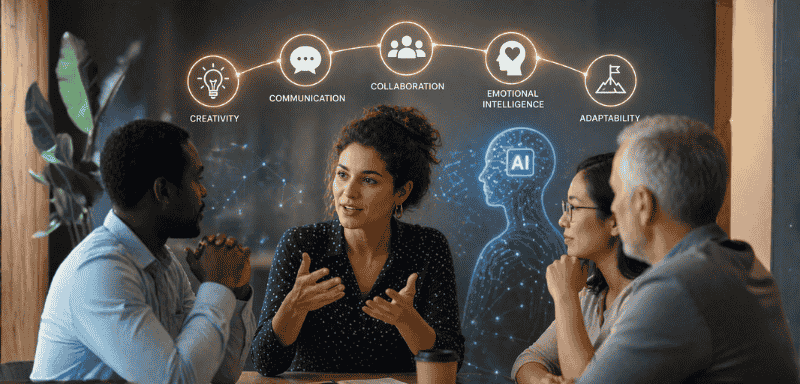
Meaningful communication today isn’t about edits to a Slack message, but about ensuring your message fits the moment, the audience, and the context.
Deliver Clarity in Noisy Digital Channels
AI drafts can flood inboxes, but it’s the human touch that lands a point. Edit for context, cut jargon, and state the outcome upfront to lead with purpose in every message.
- Clarify what you want your recipient to do so they act quickly, reducing confusion and saving time.
- Choose words that foster goodwill, because emotional cues anchor remote communication and prevent friction.
- Check in when tone’s uncertain. Prompt for clarification—”Did my last email make sense?”—when digital cues miss their mark.
- Summarize key points in group chats. Wrapping up with “Here’s the decision” steers everyone gently back to alignment.
- Express appreciation for digital contributions. A specific “Thanks for editing this deck, Janine!” compounds team morale fast.
Prioritizing human influence over mere information transforms ordinary updates into collaborative action, unlocking new trust in virtual teams.
Encourage Upward Feedback and Novel Ideas
Invite others to challenge your perspective. Ask, “What am I missing here?” to welcome fresh viewpoints and signal openness, a distinguishing trait in the soft skills tech era.
- Resist the urge to respond immediately, signaling you value reflection—not just speed—in input.
- Name wins and mistakes equally, encouraging transparency and learning from experimentation, even under the eye of AI oversight.
- Frame divergent ideas as sparks for collaborative improvement, not threats to authority. State, “Let’s add your twist to this draft.”
- Link strategic context. “If this project succeeds, our clients see value faster.” This orients teams toward outcomes, not processes alone.
- Document feedback in shared docs, making learning continuous and accessible for all teams.
These steps help cultivate a culture of innovation and psychological safety—not just compliance—making individuals indispensable in the soft skills tech era.
Elevating Emotional Intelligence to Navigate Shifting Team Dynamics
The shift to mixed human-AI teams invites friction and uncertainty, but emotional intelligence lets you guide group dynamics with steady insight.
Observe the impact: one team member’s reluctance or excitement can change an entire meeting’s tone. Tuning into such signals keeps collective goals in focus.
Reading Room Tone When AI Is Present
Body language—eye movement, mirroring gestures, micro-expressions—remains invisible to machines, but you can spot the signals when attention drifts or enthusiasm flags in real time.
Check for shifts: do people lean in, frown, or start multitasking? These moments signal opportunities to redirect conversation or check assumptions, especially valuable in the soft skills tech era.
Prompt quieter voices: “Anna, we haven’t heard your input yet.” These nudges build community and trust, elements AI rarely recognizes or repairs.
Repairing Digital Disconnects Proactively
Addressing misunderstandings early prevents remote rifts. Start with “I want to double-check our plan” in team chats, pointing to shared outcomes while inviting clarifications.
If tension rises, choose a 1:1 call over continuing in email. Use open questions—“Can you walk me through your thinking?”—to diffuse friction and accelerate resolution.
Unexpected praise, like “Great pivot on that strategy,” can restore trust instantly after hiccups in automated workflows, strengthening relationships despite digital gaps.
Turning Feedback Into Growth: Continuous Self-Improvement
Seizing constructive feedback as actionable data makes you a fast learner. In the soft skills tech era, this sets you apart from predictable, stagnant responses that AI might deliver.
Ask for concrete examples of what you did well and where you could improve, removing ambiguity from your growth process.
Creating Your Personal Feedback Playbook
Write down three behaviors you’d like to shift this quarter. For example: “Send fewer, clearer emails” or “Pause before replying.” This action plan helps crystallize vague advice into specific, repeatable habits.
Schedule short, regular review sessions with peers. Checking in once a month keeps improvements visible and sustainable, a method computers can’t reproduce thoughtfully.
Share back your learnings with team members: “Your suggestion sped up my workflow.” This loops in mutual accountability and cements psychological safety.
Iterating Soft Skills: Small Experiments Matter
Pick one area to adjust each week—like active listening. Note how meetings shift as you summarize more in real time or ask second-tier questions.
Use analogies for rapid mental checks: “If this meeting were a traffic intersection, am I running a red light or yielding?” Direct analogies support awareness and accountability.
Document what you tried, what changed, and what you’ll keep. This hands-on approach breeds lasting change in the soft skills tech era, as opposed to vague intentions.
Cross-Functional Collaboration: Humans Unify Where Algorithms Divide
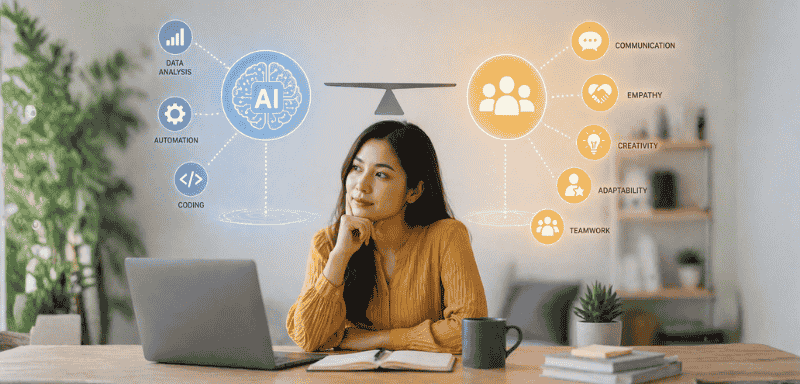
In the tangle of departments, roles, and AI tools, you’ll spark innovation by bridging those divides. The command of soft skills tech era enables you to orchestrate unity across shifting silos.
Collaboration here means translating between teams: engineering to marketing, data science to sales, or policy to design—with nuance and patience that automation misses.
Translating Jargon and Context for Cohesion
Meetings go sideways when misunderstandings about terms or priorities surface. Step in to rephrase technical language simply for broader understanding, ensuring your team isn’t left behind.
Listen for context clues—team laughter, side comments, or sudden silence—to uncover when misalignment creeps in. Use “It sounds like we’re saying the same thing two ways” to unite perspectives quickly.
This bridges goals and builds a single vision, providing real value in the soft skills tech era, where clarity and understanding outpace technical perfection.
Orchestrating Group Problem-Solving Sessions
Set up ground rules for inclusive brainstorming: appointment rotation, quiet think-time, and structured report-backs. This prevents the loudest or most technical voices from dominating outcomes.
Give feedback on process, not just results: “Let’s try a new way to rank our ideas next time.” Modeling accountability sparks longer-term buy-in across teams.
Keep change visible—summarize wins, flag what didn’t work, and track group growth. Teams see their progress and remain invested as the organization adapts for the soft skills tech era.
Building Adaptability in Ever-Evolving Team Structures
With workflows changing at rapid speed, personal adaptability keeps you relevant and employed. It’s your shield against the shocks of AI shifts and reorganizations.
Move willingly into new roles, offer to pilot tool rollouts, or shadow different departments. This hands-on style makes you a linchpin in your company’s future.
Anticipating AI-Driven Changes
Monitor signals—trialing new apps, leadership hinting at automation, or hearing “efficiency” in strategy talks. Step in early to learn the basics and ask questions about purpose and impact on people.
Share discoveries during team check-ins: “This pilot replaces two manual steps, but we’ll need to clarify new handoff points.” Prepare teams for the wave instead of fighting its current.
Pair with technical experts to see workflow pain points and design easy handovers, cementing your role as both a connector and early adopter in this soft skills tech era.
Handling Personal Uncertainty With Confidence
Reframe changing job duties as skill sprints. “I’m tackling customer demos this week instead of research.” Learn from discomfort, tracking new strengths or preferences in a note-taking app, building a portfolio of adaptability.
Celebrate learning curves with micro-milestones—completing your first process map or leading a cross-team sync—building confidence and a clear narrative for growth reviews.
Bring others along by sharing “What helped me through this switch,” normalizing change across peer groups and company culture in the soft skills tech era.
Growth Mindset: The Driver For Lasting Success in Hybrid Work
Owning your learning journey is crucial for seizing tech-era growth. The most successful professionals adopt the soft skills tech era mindset—seeing mistakes as learning, not failings.
This means closing skill gaps quickly, iterating with feedback, and experimenting with new team norms rather than waiting for formal directives from leadership.
Creating Your Continuous Learning Loop
Set quarterly themes: “Improve clarity in team emails” or “Champion upward feedback at least once per month.” Use check-ins to stay on track, since AI-based reminders rarely personalize growth choices.
Form peer support circles. “Who wants mutual feedback this month?” keeps accountability high and the learning curve steep, as the demands of the soft skills tech era evolve.
Document outcomes, celebrate progress, and update your digital profile to reflect new fluency, getting noticed for growth—not perfection or rigid routine.
Expanding Your Network to Accelerate Adaptation
Seek out communities both inside and outside work to practice soft skills and share what works. Online forums, Slack channels, or virtual meetups foster resilience and perspective across industries.
Trade small wins: “I ran a new meeting format and it boosted engagement.” These stories build momentum and attract collaborators, future-proofing your place in the soft skills tech era talent pool.
Model vulnerability—share failures as lessons, not liabilities. This normalizes learning curves, inspiring peers to risk thoughtful change and share strategies for rapid upskilling.
Realigning Priorities for a Human-Centered Future
As AI assumes routine workloads, your uniquely human actions—clarifying messages, reading rooms, inviting feedback—create the difference that keeps teams thriving in the soft skills tech era.
Lean into learning how to collaborate, adapt, and communicate with impact, knowing those skills will keep evolving as fast as technology does. Soft skills won’t be optional—they’ll be your superpower.
Each experiment, nudge, or moment of proactive empathy builds value that no tool or algorithm can replicate. Let the soft skills tech era ignite your professional journey—your advantage is just beginning.
Trending Topics

Jobs at Amazon UK Near You – High Hourly Pay & Quick Hiring Process
Find current Amazon UK job openings paying up to £16.82/hour. No degree or experience needed. Work in warehouses or from home. Apply today.
Keep Reading
Vacancies at South African Airways: Earn Up to R10,000/Month in Entry-Level Roles
Explore vacancies at South African Airways! Learn how to apply, what roles are open, and which benefits you'll get.
Keep Reading
TELUS Digital: Remote Jobs in SA with No Experience Needed
Dreaming of working from home but don’t know where to start? TELUS Digital welcomes beginners! Discover how to land your first remote job.
Keep ReadingYou may also like

Shoprite Jobs in South Africa: Earn from R7,000 and Grow Fast!
Need a job but not sure where to start? This guide shows how to get hired at Shoprite—even if you’ve never worked before!
Keep Reading
The most in-demand AI skills for the 2026 job market
What are the most in-demand AI skills for 2026? Find out which competencies are essential to stay competitive in the market.
Keep Reading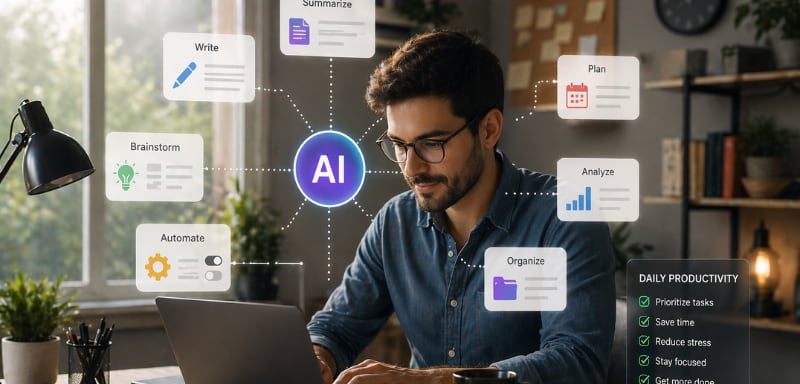
How to use AI tools to boost your daily productivity
Discover the best AI-powered productivity hacks for 2026 that help you manage emails, schedule meetings, and generate content in seconds.
Keep Reading


