From Linear to Dynamic: The AI-Driven Transformation of Careers

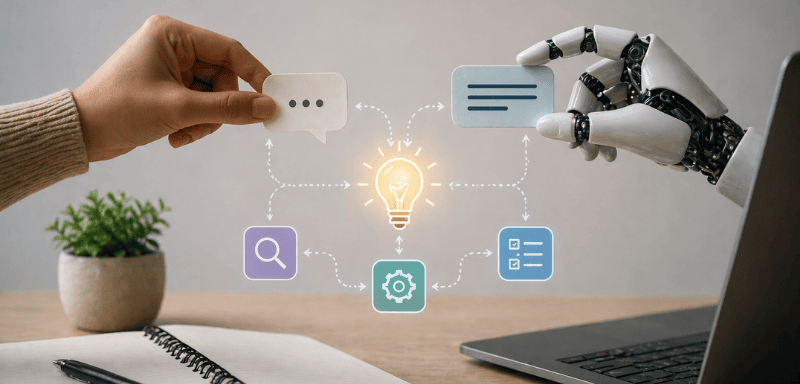
Picture logging into work and seeing AI tools collaborating side-by-side with your human coworkers. That’s the new normal, making AI career transformation a steady part of daily life for millions, no matter the field.

Job roles that once followed predictable tracks now offer branching options where skills, not titles, drive your growth. From retail to finance, career ladders morph as AI handles more of the repetitive and routine work.

Curious about shifting from static job descriptions to flexible, evolving paths? Explore how AI career transformation offers fresh chances for everyone, whether you’re just starting or ready for something new.

Redefining Roles: Understanding the New Job Landscape

AI career transformation reshapes roles you thought were set for life. Adaptability now outweighs tradition. As technology automates old tasks, jobs become broader, richer, and more focused on creative solutions and communication.

This shift means you don’t have to be a coder to benefit from AI. Whether you manage projects, analyze sales, or teach, learning to use AI unlocks new professional lanes you can pursue today.

Expanding Office Roles with Smart Automation

A finance analyst used to spend hours crunching numbers in spreadsheets. With AI, pattern spotting and forecasting become fast and reliable, freeing more time for strategic brainstorming and direct client support.

Imagine coworkers turning insights into action instead of waiting for reports to run. The office becomes dynamic—a place to debate ideas instead of passively checking off tasks.

This AI-powered environment energizes meetings and makes problem-solving conversational. People who question “What could we automate?” now shape the next generation of office roles.

Customer Service Careers: Blending Empathy with AI Data

Familiar call center jobs aren’t vanishing—but they are evolving. Chatbots filter simple requests so human reps can focus on issues demanding empathy, judgment, or nuanced persuasion.

Employees become relationship builders rather than script followers, leveraging AI suggestions to tailor interactions to moods and needs. This transforms customer support into a more skilled, less draining line of work.

Workers who learn to interpret AI feedback and shift their approach grow much faster. Being adaptable turns routine helpdesk work into high-value customer partnerships.

Traditional RoleAI ImpactNew Skills NeededTakeaway
Finance AnalystAutomated data prepAI data tools, interpretationFocus efforts on strategy instead of repetitive tasks.
Project ManagerAI-driven trackingAI planning tools, change managementSpend less time scheduling, more on collaboration.
TeacherPersonalized learning plansAI content platforms, data readingAdjust lessons to each student dynamically.
Retail AssociateAI inventory managementTech troubleshooting, product curationGuide customers, not just restock shelves.
Healthcare AdminAI appointment systemsWorkflow tuning, patient engagementDeliver better patient experience and efficiency.

Building Skills That AI Amplifies, Not Replaces

To lead in a changing workforce, you’ll want skills AI career transformation enhances: critical thinking, problem-solving, and learning how to work with AI tools as partners.

Shifting mindsets—learning to embrace lifelong skill-building—brings more job security than memorizing any single tech.

Practical Upskilling for the Smart Professional

Upskilling for AI career transformation starts small. Begin with the tools you already use, like adding automation plug-ins to your spreadsheets or exploring chatbots in your messaging apps.

  • Test drive new AI features as soon as they appear, so you spot opportunities before others.
  • Attend workshops where you practice setting up simple AI workflows, combining manual skills with automated shortcuts.
  • Join cross-functional teams, asking teammates “How could AI ease your workload?”
  • Read use cases from your industry—look for ways AI career transformation has benefitted similar roles.
  • Document every small win to build your AI experiment portfolio and demonstrate your evolving expertise.

Becoming a go-to person for AI implementation signals readiness to advance beyond your title.

Developing Soft Skills for the AI Workplace

AI career transformation asks for more than technical know-how. Start by cultivating deeper empathy during conversations—if you’re not understanding a colleague’s frustrations, ask follow-up questions before suggesting a solution.

  • Lead brainstorms that focus on “what could we try with AI” rather than “why it won’t work.”
  • Volunteer to test AI-powered products and give actionable feedback, especially in unfamiliar areas.
  • Listen actively in meetings to catch early signals about workflow pain points AI might solve.
  • Show appreciation when teammates adapt to AI changes—small gratitude builds trust for bigger experiments.
  • Mentor those newer to AI concepts, using analogies drawn from non-tech experiences to demystify the transition.

Strengthening these people skills helps you thrive, even as technology continues to evolve each role you hold.

Reimagining Training and Lifelong Learning Routes

As AI career transformation restructures job requirements, learning itself gets a makeover. On-the-job training shifts from static courses to interactive, ongoing experiences driven by workplace AI needs.

This change encourages job seekers and employees to treat upskilling as regular maintenance—like updating your phone—rather than preparing only for big leaps.

Embedding AI into Everyday Learning Tasks

Even simple roles now use chatbots for micro-learning: a retail team updating sales scripts mid-shift or marketers practicing new pitches with AI sidekicks ready to give feedback instantly as questions arise.

Digital platforms reward bite-sized progress—finishing a five-minute lesson each lunch break, for example—so knowledge builds naturally, without time-intensive study blocks.

This AI career transformation means learning adapts to your style. If you remember best by doing short, interactive drills, AI recommends more of them, honing your abilities at your pace.

Shifting Certification Paths and Career Mobility

Recruiters now prioritize visible growth over degrees. They look at digital badges for using an AI customer service tool or certifications for building automated dashboards far more than transcripts alone.

Career changers benefit most; someone moving from hospitality to tech showcases portable AI skills in interviews, bypassing traditional deterrents like lack of direct experience or a different major.

AI career transformation opens lateral moves. When employees show AI literacy, firms trust them with cross-department projects—think marketing pros developing data dashboards or operations staff piloting recruitment chatbots.

Redrawing Boundaries: Where Human and AI Skills Merge

This new era isn’t just about machines replacing hands-on work. Instead, boundaries blur as humans and AI support each other, expanding what jobs demand and what workers supply.

Collaboration—knowing when to ask for AI help and when to trust your own instincts—emerges as a key job skill in AI career transformation across sectors.

Pairing Intuition and AI in Decision-Making

Healthcare providers now rely on AI for diagnosing patterns in patient histories. But they must also read subtle body language cues—a child squirming in discomfort, a senior hesitating before answering.

This combination leverages fast, data-backed suggestions, but professionals still exercise judgment, double-checking AI advice against lived experience and patient emotions.

It’s like using GPS when driving in traffic. The route is smarter, but local shortcuts—noticed only by attentive drivers—still matter. This dual approach increases safety and service quality.

Creative Fields Thrive on Shared Intelligence

AI career transformation energizes creative roles instead of making them obsolete; imagine a songwriter testing hooks with AI-generated samples, then riffing fresh melodies on top of them during rehearsal.

In design teams, AI handles color matching, font selection, and fast drafts, leaving the imaginative sparks and campaign ideas up to humans.

Artists who pair AI exploration with hands-on experimentation consistently deliver breakthrough projects faster, surprising both audiences and colleagues with agile processes that evolve with every tool.

Looking Forward: Navigating Your Next Chapter

AI career transformation isn’t a distant trend—it’s shaping options for everyone, regardless of industry, background, or long-term goals. Shifting toward “skills plus AI” mindsets means more opportunities and less fear of automation.

Learning on the job, taking on new roles, and experimenting with fresh technology become regular milestones instead of major career upheavals. Every new tool is a chance for professional reinvention.

Think of each AI interaction as another brick in your reinvented path. Stay curious, adapt in small but frequent steps, and you’ll find the career landscape more open and customizable than ever before.

Trending Topics

content

The impact of AI on creative industries and new roles

AI is transforming film, design, and writing. Find out how to future-proof your creative career by embracing human-AI collaboration.

Keep Reading
content

Housekeeping Jobs in South Africa: Salaries can go above ZAR 10,000!

Get step-by-step guidance on how to apply for housekeeping jobs in South Africa and increase your chances to get a better income!

Keep Reading
content

How to Become a Security Guard: A Guide to Start Your Career

Want a stable job in security? Find out how to get trained, licensed by PSIRA, and start working as a security guard in South Africa.

Keep Reading

You may also like

content

Why soft skills are more important than ever in an AI-driven world

Protect your career from automation. Learn why emotional intelligence, adaptability, and soft skills are the ultimate currency.

Keep Reading
content

Looking for Work? KFC Jobs in South Africa Offer a Quick Start and a Path to Growth

Get hired fast at KFC South Africa! No experience needed. Learn about salaries, benefits, and how to apply for entry-level jobs step by step.

Keep Reading
content

Best AI Tools for Resumes and Portfolios: Top Picks & Key Features

AI-powered resume and portfolio tools help you create professional applications faster. Discover the top platforms for job seekers.

Keep Reading